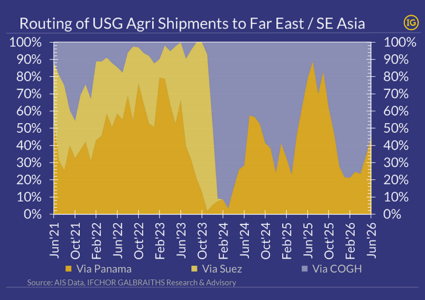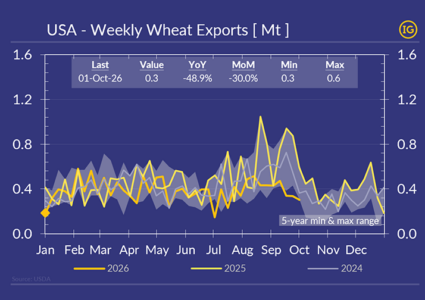
US wheat exports remain stuck at unusually low levels. Exports slipped to 0.3Mt/wk in the week ending 1-Oct, -10% WoW and -49% YoY.
US wheat exports stuck at seasonal lows
Read more

US wheat exports remain stuck at unusually low levels. Exports slipped to 0.3Mt/wk in the week ending 1-Oct, -10% WoW and -49% YoY.
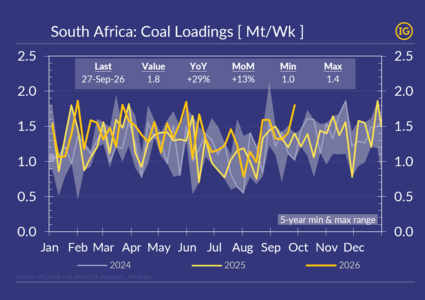
South African coal exports climbed to 1.8 Mt/wk in the week ending 27-Sep, +28% WoW and +29% YoY, a fresh five-year seasonal high and close to the four-year peak of 1.9 Mt/wk.
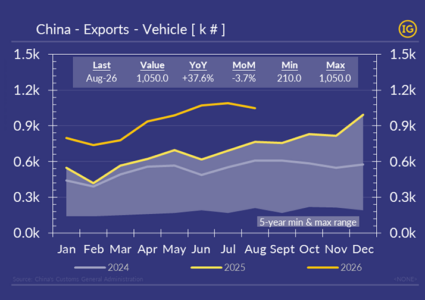
China’s vehicle exports reached 1.05M units in Aug’26, +37.6% YoY, holding above 1M mark for a third month.
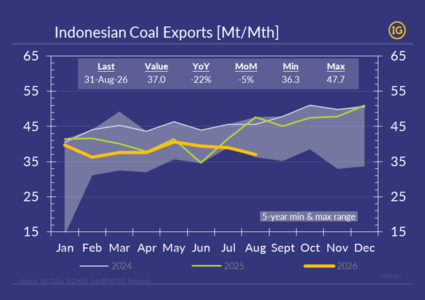
Indonesian coal exports fell to 37Mt in Aug’26 (-22% YoY), their weakest August since 2021.
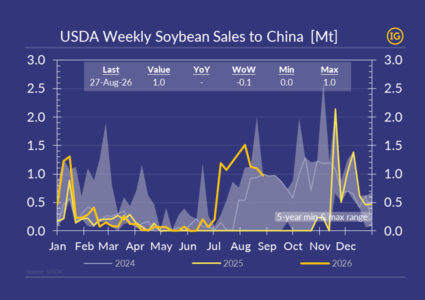
Chinese state-owned trading houses have bought ~11Mt of U.S. soybeans since the latest China–US meeting in May’26, putting China on track toward of earlier commitments to purchase at least 25Mt annually through 2028.
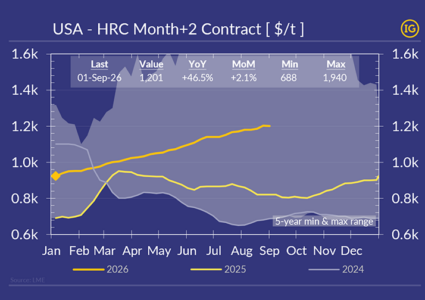
US steel prices have climbed steadily through 2026 as firm demand has met constrained domestic supply and lower imports.
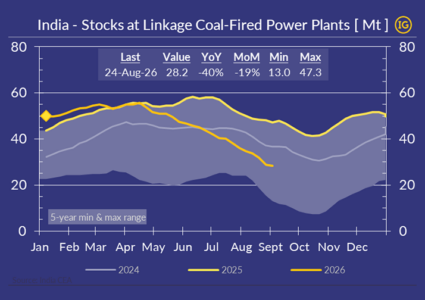
India’s coal stocks at linkage coal-fired power plants fell to 28.2Mt as of 24-Aug, down -40% YoY, extending the drawdown from 38Mt at end-Jul’26.
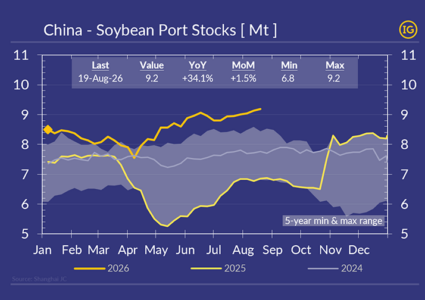
China’s soybean inventories at ports rose to a record 9.2Mt last week, up +0.1Mt or…
With bauxite inventories in China holding below 35 Mt for nearly a month, bauxite prices rising — first in China in Jul’26, then…
Last Friday, Chinese buyers purchased at least 13 cargoes (0.8Mt) of new-crop U.S. soybeans, bringing total 2026/27 season purchases to around 5Mt.
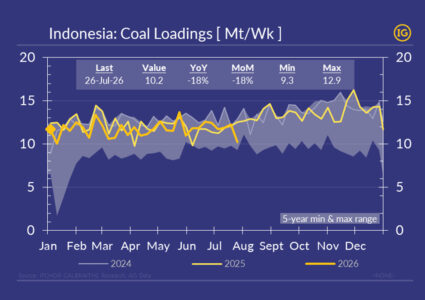
Indonesian coal loadings fell to 10.2Mt/wk last week, down -18% YoY and -18% MoM, reaching a 2026 low and approaching a 3-year low.
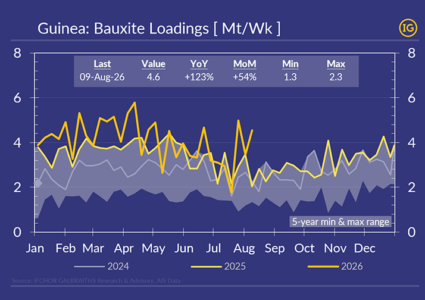
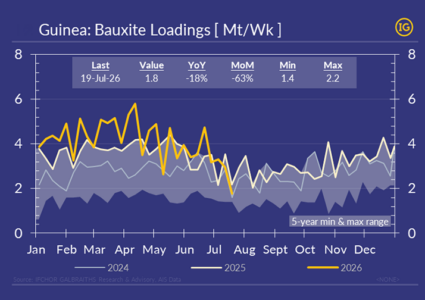
Guinea’s bauxite loadings slumped to 1.3 Mt/wk last week, down -50% WoW and -38% YoY.
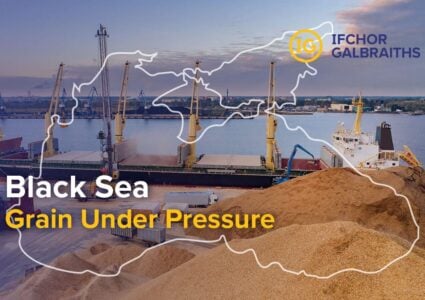
As disruption persists in the Black Sea, IFCHOR GALBRAITHS Research explores the potential implications for grain exports, freight markets and vessel demand.
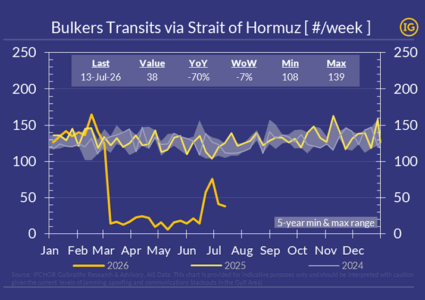
Dry bulk transits through the Strait of Hormuz fell to just 38 vessels last week (-7% WoW, -70% YoY), reflecting renewed geopolitical tensions after the ceasefire collapsed.
The analysis is based on IFCHOR GALBRAITHS’ latest Focus On: El Niño & Implications, which examines how evolving weather patterns could influence coal, grains, bauxite, iron ore and key freight chokepoints over the coming year.
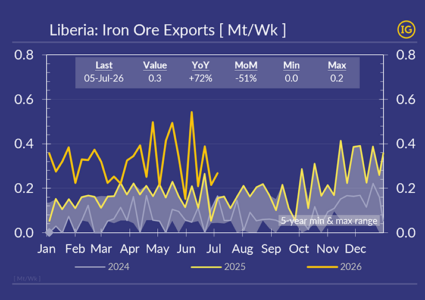
While Guinea’s Simandou project dominates headlines, Liberia is quietly emerging as West Africa’s other iron ore success story.
IFCHOR GALBRAITHS has launched Agri Markets 360, a new annual research report providing comprehensive analysis of global agricultural trade, export flows, logistics and shipping demand across the world’s major agricultural markets.
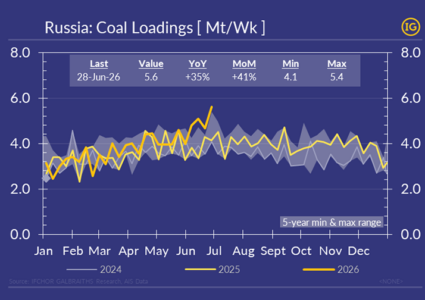
Russian coal loadings reached 5.6Mt/wk last week, up +41% MoM and +35% YoY to a fresh 5-year high.
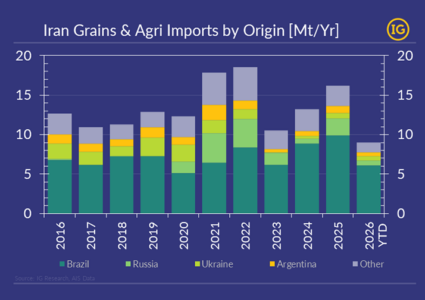
Despite speculation that improving US-Iran relations could revive US grain exports, Iran’s central bank governor stated that existing agreements do not require purchases of US agricultural products.
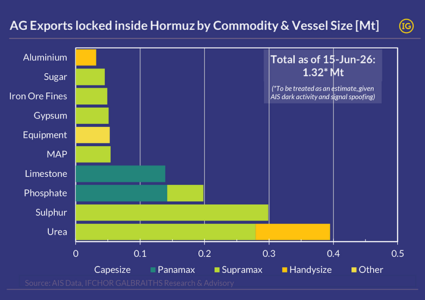
If the announced framework for a 60-day US-Iran ceasefire is signed on Friday, it could pave the way for a gradual reopening of the Strait of Hormuz, allowing fertilizer cargoes stranded inside the Gulf to resume moving.