

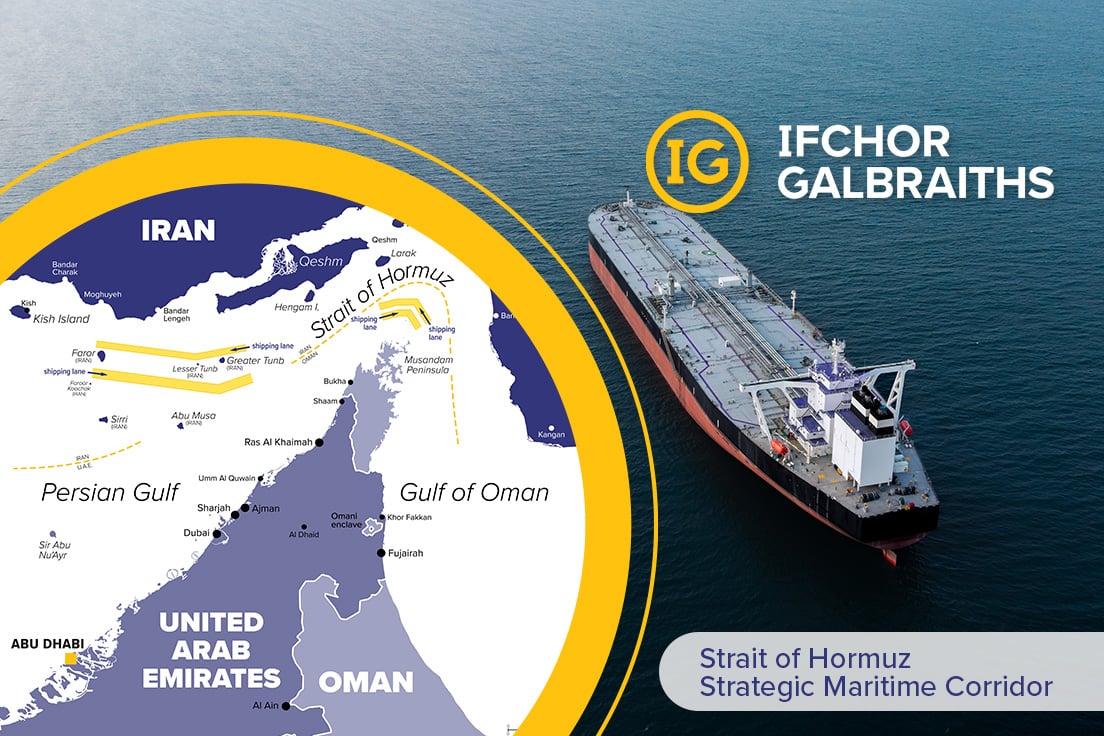
The escalation of conflict in the Middle East has materially increased geopolitical risk for global shipping.
IG is assessing the situation through two primary lenses: tankers, where direct exposure to the Strait of Hormuz is critical, and dry bulk, where the impact is secondary but potentially significant through energy substitution, congestion and tonne-mile effects.
The bigger picture is clear. Hormuz is not simply a regional chokepoint — it is central to global energy flows. How long disruption persists will determine whether this remains a freight-supportive logistics shock or evolves into a broader macro demand risk.
Tankers: Direct Exposure to a Critical Artery
As outlined in our 2 March update to tanker clients, vessel transits through the Strait of Hormuz have fallen sharply. AIS data indicated only two tankers transiting on 1 March, while approximately 138 oil tankers — including 55 VLCCs — remain within the Gulf.
Around 27% of global seaborne oil volumes pass through the Strait. In crude alone, the share exceeds 30%, and around 59% of global VLCC liftings are linked to Hormuz transits.
In tonne-mile terms, the exposure is even greater. Any sustained disruption would have an outsized impact on tanker demand, fleet utilisation and effective supply.
Elevated global crude inventories offer short-term resilience for buyers. However, if replacement barrels are required at scale, alternative loading regions would become increasingly active, extending voyage distances and reshaping trade patterns.
Dry Bulk: Secondary Effects, Material Implications
While dry bulk flows via Hormuz are less systemically critical than crude or LNG, the indirect effects are meaningful.
Disruption to Qatari LNG exports has driven gas price volatility and accelerated LNG-to-coal substitution. This supports incremental demand for Australian and Colombian coal and increases tonne-mile requirements over time.
At the same time, congestion within the Gulf is building. Continued avoidance of both Hormuz and the Red Sea reduces route efficiency and prolongs fleet inefficiencies. What began as a tactical adjustment risks becoming structural if disruption persists.
Duration Will Define the Outcome
Across both sectors, duration is the key variable.
A short conflict — measured in weeks — would likely tighten effective vessel supply through congestion and rerouting. Dry bulk could remain supported by substitution effects and extended voyages.
A prolonged conflict presents a different risk. Sustained energy prices above USD 100 per barrel would intensify inflationary pressure and weigh on industrial demand. In that scenario, macro demand erosion could outweigh logistical tightening.
The critical question is whether this episode proves temporary or results in a more structural repricing of geopolitical risk in trade routing, energy sourcing and freight markets.
At IG, we are addressing this through a coordinated, multi-sector approach across tankers, dry bulk, gas and chemicals. We will continue to provide structured updates as conditions evolve.
In volatile markets, clarity and execution are essential. Our focus remains on identifying structural signals beneath the immediate volatility — and supporting clients with measured analysis and decisive action as the situation develops.