

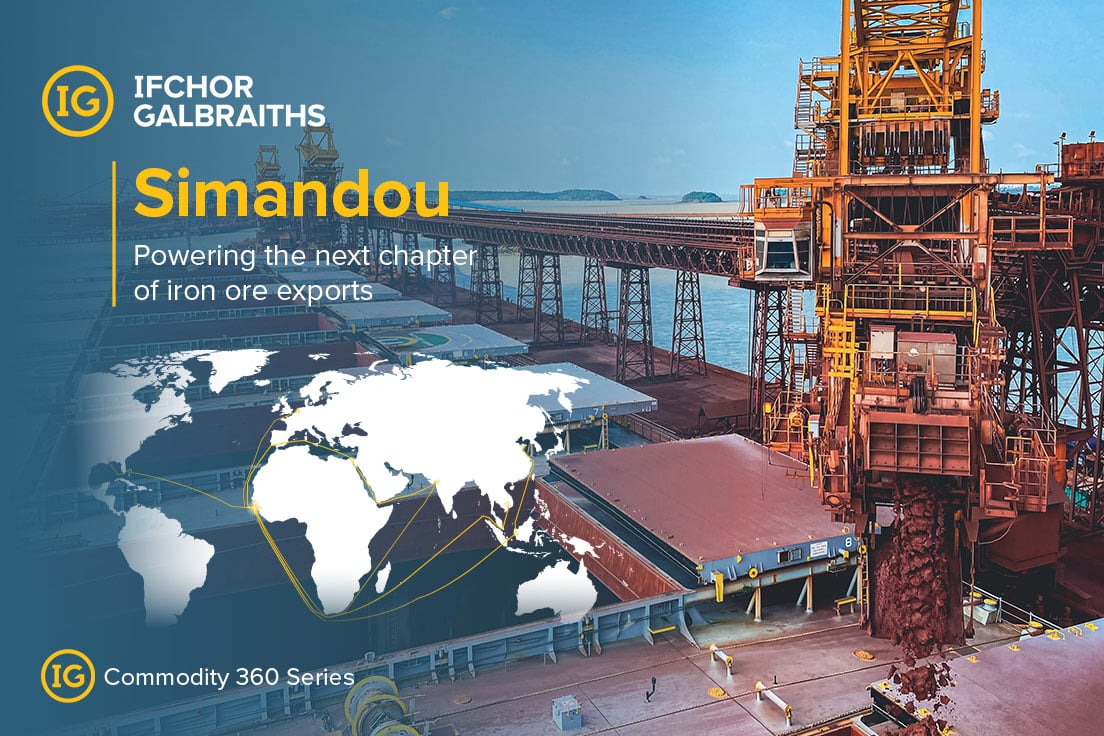
For much of the past two years, Simandou was viewed primarily as a long-dated infrastructure story: ambitious, strategically important, but repeatedly delayed by logistics, funding and operational bottlenecks.
But according to IFCHOR GALBRAITHS’ latest analysis, Guinea’s iron ore exports are now entering a materially faster ramp-up phase, supported by a combination of political pressure, improving infrastructure readiness and significantly stronger iron ore economics relative to bauxite.
The shift became increasingly visible during April 2026, when BWCS and RT/Simfer loaded six ocean-going vessels for nearly 1.8Mt of exports — exceeding total first-quarter volumes. AIS data has since pointed toward sustained weekly exports around 0.6Mt/week, with the possibility of surpassing 1Mt/week during May.
A key theme emerging from the report is that the bottleneck has evolved.
Downstream marine logistics at Morebaya now appear increasingly capable of supporting higher export flows. The focus instead is shifting upstream toward mine production, rail transportation and the resilience of the supply chain during Guinea’s rainy season.
The economics also matter.
With iron ore prices remaining above $100/t CFR China while bauxite prices softened considerably, operators and the Guinean government now have strong incentives to prioritise iron ore exports. The report suggests this may already be driving the redeployment of logistics assets away from Guinea’s bauxite trade and toward Simandou operations.
The research also explores:
- Rail deployment progress and locomotive deliveries
- Port inventory accumulation during 1Q’26
- Cooperation between BWCS and RT/Simfer
- Morebaya congestion trends
- Potential El Niño impacts on West African rainfall and exports
- Why existing 2026 export forecasts may still prove conservative
This report forms part of IFCHOR GALBRAITHS’ Iron Ore 360 service — a specialist research product designed to combine mine-level intelligence, freight market analysis and port infrastructure monitoring into a single integrated market view.
Subscribers receive ongoing analysis of:
- Global iron ore trade flows
- Export ramp-ups and disruptions
- Freight and Capesize market implications
- Port congestion and vessel activity
- Commodity pricing trends
- Infrastructure and logistics developments shaping future supply
For dry bulk markets, the implications could be significant. A faster-than-expected Simandou ramp-up would not only reshape Guinea’s export profile but could also alter Atlantic iron ore trade balances sooner than many market participants currently anticipate.
Contact us for a full report to see the type of in-depth operational and market intelligence available through the Iron Ore 360 service.