

For most dry bulk shipowners, market attention is typically focused on some familiar friends: Chinese steel production, vessel supply, commodity prices, interest rates and geopolitics.
This year, however, another set of indicators deserves a place on every market watchlist.
The emergence of El Niño has the potential to influence commodity production, inland logistics and global trade flows across several major dry bulk markets. While weather rarely becomes the dominant driver of freight markets, it can amplify existing trends, create bottlenecks and reshape tonne-mile demand in ways that present both risks and opportunities.
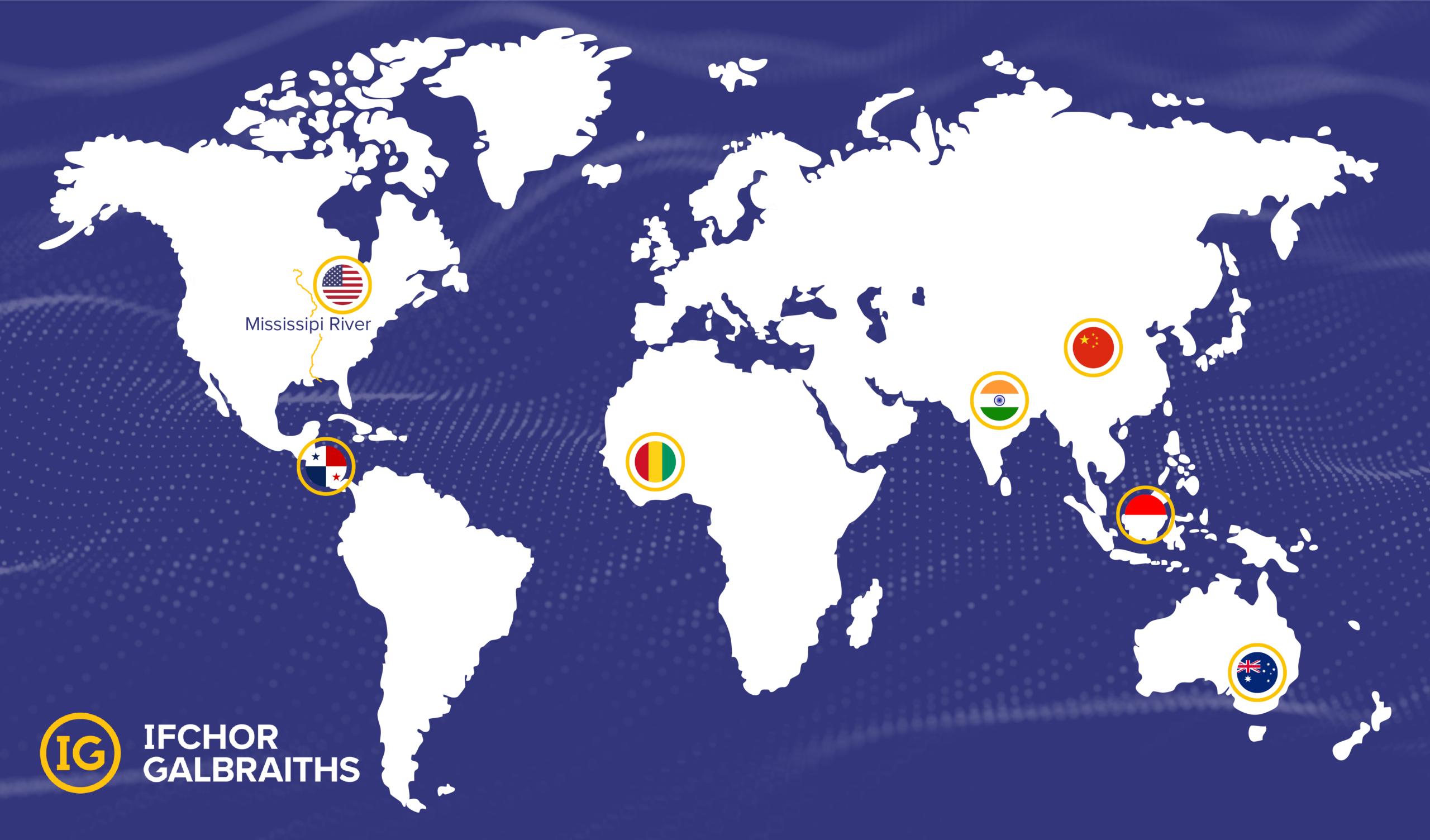
According to IFCHOR GALBRAITHS Research, these are the seven indicators worth monitoring over the months ahead.
1. The Indian Monsoon
The timing and strength of the Indian monsoon may prove one of the most important drivers for coal markets this year.
A delayed or weaker monsoon prolongs high temperatures and reduces hydropower generation, increasing reliance on coal-fired electricity. India already generates more than 70% of its electricity from coal, meaning stronger cooling demand can quickly translate into additional imports from Indonesia, Australia and South Africa.
For Panamax and Capesize owners, this is potentially one of the strongest positive freight signals associated with El Niño.
2. Indonesian river levels
Demand is only one side of the equation.
Indonesia’s coal industry depends heavily on inland barges moving coal along river systems to export terminals. During previous El Niño events, lower river levels reduced barge capacity and slowed exports, tightening global coal supply.
Should another dry season develop, logistics rather than mine production could become the limiting factor.
For shipowners, supply disruption often creates volatility—and volatility frequently generates freight opportunities.
3. Panama Canal draft restrictions
The Panama Canal has recovered significantly since the severe drought of 2023-24, but operators have already begun tightening draft limits once again.
Even relatively modest reductions in permitted draught affect vessel eligibility and increase competition for transit slots, particularly as bulk carriers compete with LNG and tanker traffic.
Changes in canal accessibility can quickly alter voyage economics, waiting times and vessel positioning across both the Atlantic and Pacific basins.
4. Australian wheat production
Unlike coal, grain markets tend to respond to El Niño through changing trade patterns rather than falling trade volumes.
Should Australia’s wheat crop disappoint, buyers are likely to source cargoes from South America, North America, Europe and the Black Sea instead.
That redistribution increases average sailing distances, supporting tonne-mile demand for Panamax, Kamsarmax and Supramax vessels even if total grain trade changes relatively little.
5. Mississippi River water levels
The Mississippi River remains one of the world’s most important export arteries for agricultural commodities.
Low water levels reduce barge efficiency, delay exports through the US Gulf and can encourage buyers to source grain from alternative exporting regions.
History has shown that relatively small changes in inland logistics can have significant consequences for global freight patterns.
6. Guinean bauxite and iron ore
Whilst rapid mine expansion is the key driver in export volumes, changing weather does play a role. Exports typically ease between July and October in the rainy season, but a weaker rainy season under El Niño means less logistical and mine disruption and therefore a boost to export volumes.
7. Chinese weather
El Niño means a higher risk of heavy rainfall and floods in central and southern China whilst northern China tends to become hotter and drier. Wetter weather leads to stronger hydropower generation and lower coal imports. Heavy rainfall can also disrupt port operations and increase congestion at Chinese discharge ports across multiple commodities, creating additional inefficiencies that can support freight rates.
Not every commodity is equally exposed
Iron ore remains overwhelmingly driven by Chinese steel demand, while Guinea’s rapidly expanding bauxite sector continues to be shaped primarily by structural mine growth rather than seasonal weather.
Coal and agricultural commodities, however, are different. They sit at the intersection of weather, energy demand and logistics—making them particularly sensitive to El Niño’s effects.
Vincent Lemaitre, Head of Dry Bulk Research at IFCHOR GALBRAITHS, said:
“Owners shouldn’t stop watching China, but they should widen the lens. Weather is one of the few macro factors capable of influencing multiple commodity supply chains simultaneously. It affects where cargoes originate, how they’re transported and how far they travel. Those changes can have just as much impact on freight earnings as shifts in commodity demand itself.”
The message for shipowners is straightforward.
China will remain the dominant driver of the dry bulk market, but this summer the weather deserves a place on the bridge alongside the economic data. The owners best positioned to respond may be those watching rainfall forecasts, river levels and canal restrictions just as closely as commodity prices.