

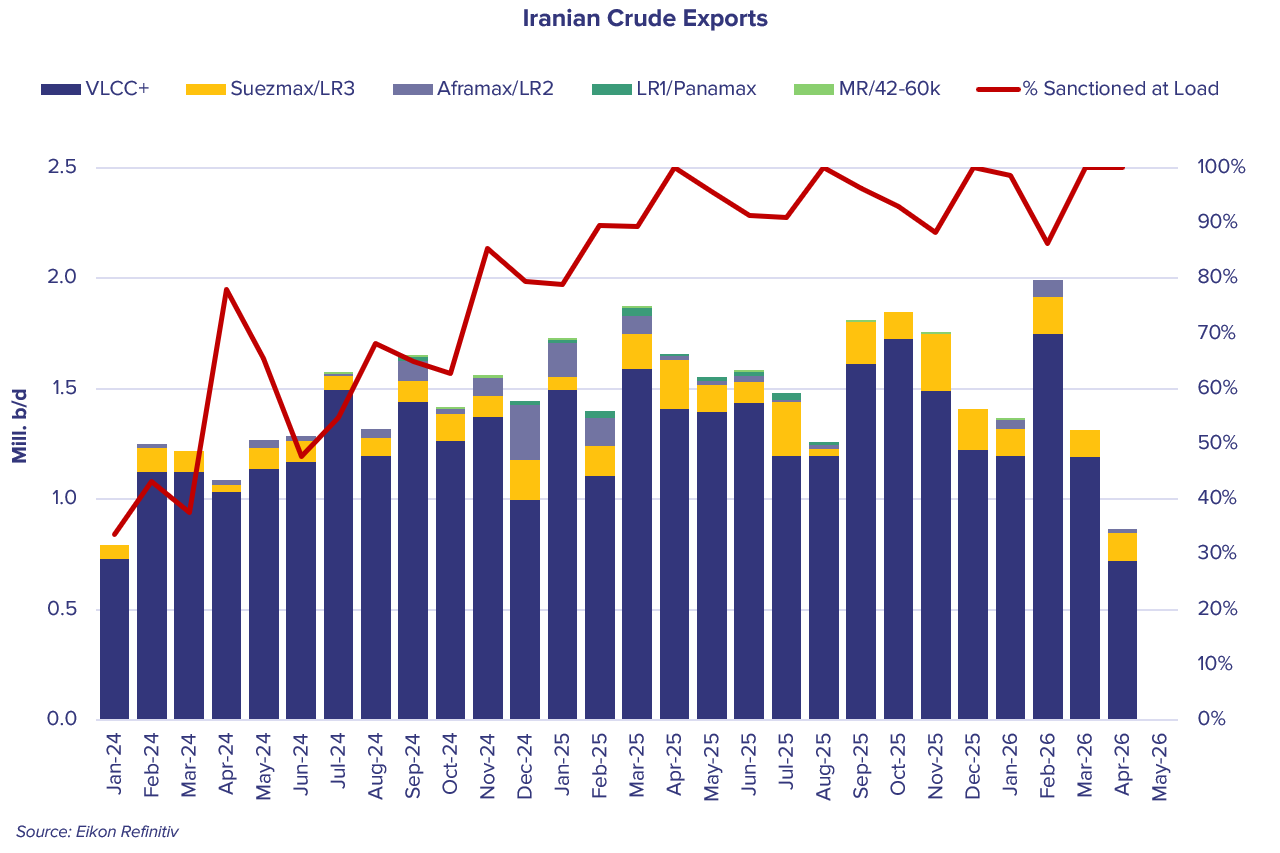
As of 22nd June 2026, and until 21st August 2026, OFAC is authorizing transactions related to Iranian oil & petroleum products. “All transactions….that are ordinarily incident and necessary to the production, sale, delivery, or offloading of crude oil, petrochemical products, or petroleum products of Iranian origin, including transactions involving vessels blocked…are authorized.”
This latest move by OFAC is in line with Point 10 of the Memorandum of Understanding and marks a significant step towards the US administration’s undertaking to “terminate all types of sanctions against Iran….in an agreed upon schedule as part of the final deal“. The waiver further allows for transactions involving the “importation into the United States of crude oil….and petroleum products of Iranian origin.”
The lifting of the blockade and sanctions waivers offers a substantial lifeline to Iranian barrels leaving the Gulf.
Iranian barrels are in the near-term likely to continue to head on the existing logistics infrastructure, comprising of sanctioned vessels. These vessels, with guidance from Iran and on established ‘Iranian’ transit routes, are also likely to be less concerned by the potential dangers of mines and/or any ‘snapping-back’ of blockades/sanctions, allowing for a prompt return to operations.
In the immediate term, Iranian barrels are likely to head to China, however, as the market digests the waiver impact, other buyers may begin to dip a toe in the Iranian market, especially other buyers in Asia, many of whom see significant requirements for feedstock. India is geographically well-placed to take prompt cargoes, within the initial waiver period.
More broadly, the issuance of this waiver represents a significant step forward in the path to a full reopening of the Hormuz. Whilst on paper only temporary, this waiver creates an environment where Iran is being welcomed back into the international oil market, and the US gets to benefit from the opening of the Hormuz and the lower energy prices this is likely to bring. As a result, it creates noteworthy barriers to either party actively re-pursuing the full closure of the Hormuz, and could help incentivise other regional exporters to consider reversing shut-ins.
Whilst the sanctioned fleet is likely to continue to play a role in the market, as the situation further stabilises there could be incentives for ‘market-based’ tonnage to lift barrels. Chinese-linked vessels are likely to be first-movers in this respect, particularly as EU/UK sanctions remain in place. Broadly speaking, any Iranian energy heading on non-sanctioned tonnage represents an upside for these tankers.