

It is that time of the year again! As we swing towards the backend of Q3, and whilst focus clearly remains on ongoing geopolitical volatility, thoughts may begin to turn towards the new year. One of those key areas of interest for the tanker market, is the inevitable flat rate changes.
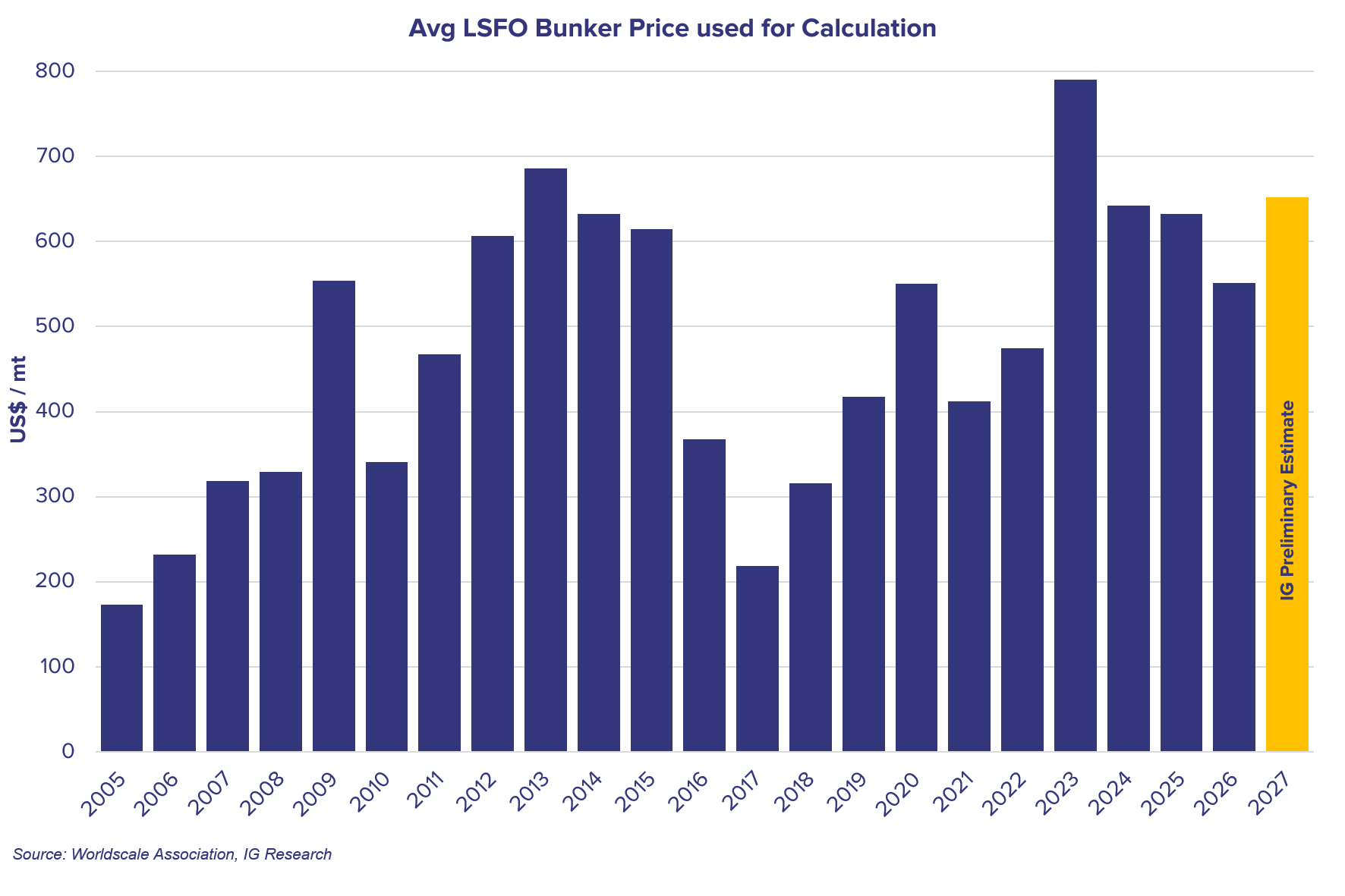
Traditionally the flat rates have always been most sensitive to the changes in the bunker prices. This obviously depends on the length of the voyages for which the rates were produced as well as the type of fuel burned, but in general, historical bunker prices have always been a good indicator of the flat rates movements and are used as a major component to try to assess potential changes for next year.
The window for 2027 flat rate calculations cover the period October 2025 to September 2026. With the events in the Middle East, oil prices have been on something of a rollercoaster ride over the period since March 2026, resulting in some sharp swings in bunker prices for a good portion of the contributing period. This holds particularly true in the LSMGO markets, where a combination of refined product tightness and the increased demand from relatively new ECA zones in the Med, has helped prices surge.
Official Worldscale LSFO bunker prices are currently only published up to July 2026, with this data suggesting reference LSFO pricing has increased by approximately 18.3% compared with the 2026 calculation reference period. With two months of data yet to come through, the change is likely to be marginally higher given the recent trend of non-official bunker pricing. The change is likely to be even sharper for the ECA based flat rates, with LSMGO pricing estimated to have increased by approximately 47.7% relative to the 2026 reference period.
These bunker price rises will be reflected in an estimated 8.3% increase in flat rates calculated predominantly with LSFO bunkers, and an approximately 21.1% increase for those ECA based voyages. These figures are based on the average estimated changes across the full basket of tankers routes assessed by IG and the specific route by route changes will clearly deviate from these values. It is important to note that fluctuations in port costs and exchange rates, which have the potential to significantly impact flat rates, especially on shorter-haul voyages, have not been incorporated into these estimates.
The one point of additional interest for 2027 flat rates will be in the inclusion of the UK ETS costs directly into the flat rates. The inclusion of shipping within the UK ETS came into force on the 1 July 2026 and mandates the surrender of allowances under the Cap & Trade scheme for vessels operating in UK ports and for cabotage business intra-UK. This inclusion has the potential to push the flat rate increase slightly higher for relevant voyages.
IG Research will continue to monitor bunker price moves, and the publication of the 2027 Flat rate schedule closely. For further questions, please do not hesitate to contact us directly.