

The UAE will leave OPEC (and OPEC+) from 1st May 2026, as the country seeks to “meet changing demand” and “gradually ramp up production” according to a statement from the Energy Ministry.
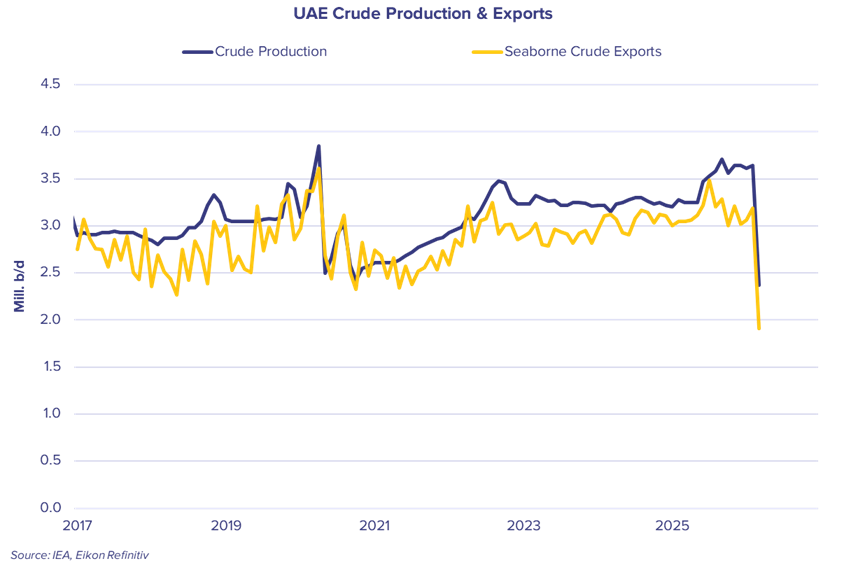
Pre-US/Iran conflict the UAE was producing around 3.6m b/d, making the producer one of the largest producing member countries within OPEC.
By operating outside the constraints of OPEC shared policies, the UAE will be seeking increased flexibility to adjust production.
However, given the current effective closure of the Strait of Hormuz, there is limited ability for the UAE to alter production and export levels and therefore limited immediate impact for tankers. March 2026 production levels were already trimmed to sit at 2.37m b/d, with exports effectively limited to volumes that can be lifted ex-Gulf of Oman.
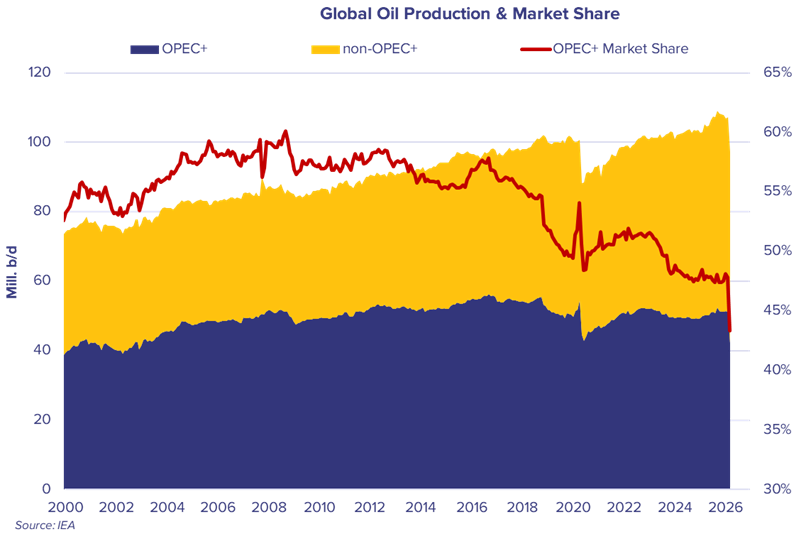
More broadly, the UAEs exit will see OPEC’s share of global crude production further decline and limit the organization’s effectiveness in managing global crude production and pricing.
For further insights, contact [email protected].